Bad Bunny Halftime Show: Decoding His 'America' Unity Message
The Super Bowl Halftime Show stands as one of the world's most coveted musical stages, a platform where artists deliver not just a performance, but often a profound cultural statement. When whispers of Bad Bunny taking the helm for Super Bowl LX began to circulate, the excitement was palpable. The eventual spectacle delivered by the Puerto Rican superstar was nothing short of a seismic event, an electric fusion of reggaeton, unbridled confidence, and a poignant call for unity that transcended language barriers. To truly grasp the depth of his performance, particularly his evocative 'America' unity message, a comprehensive Bad Bunny Halftime Show Translation is indispensable.
The Grand Spectacle: Bad Bunny's Halftime Debut
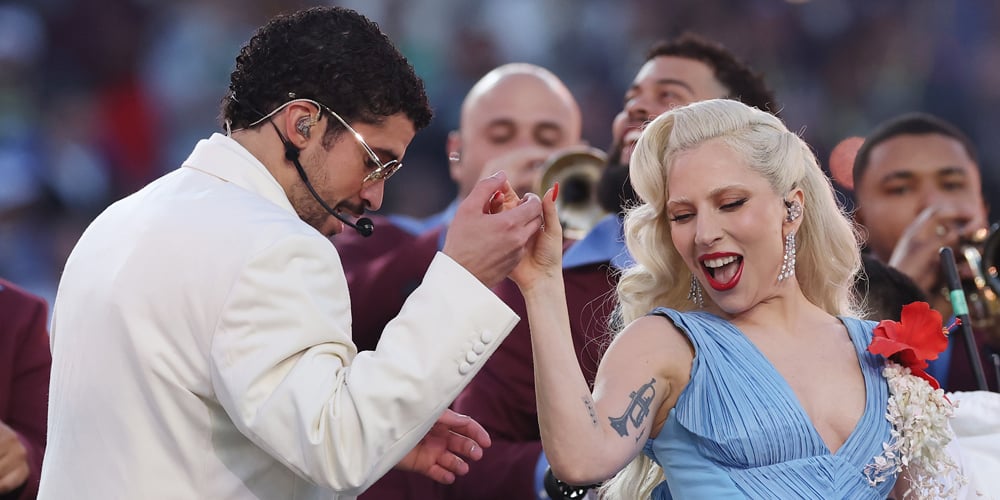
From the moment the lights hit the stage at Levi's Stadium, Bad Bunny, known for his groundbreaking music and genre-defying style, commanded attention. Flanked by unexpected but welcome appearances from icons like Lady Gaga and Ricky Martin (as per the show's purported lineup), his set was a vibrant tapestry of sound and visuals. The decision to deliver a predominantly Spanish-language performance on such a globally watched stage was a powerful artistic choice, a celebration of his roots that nonetheless resonated universally.
The atmosphere was an immediate invitation to a party, a sentiment encapsulated early in the show with the declaration, "Welcome to the biggest party in the whole world." This wasn't just a concert; it was an immersive experience designed to transport millions into Bad Bunny's world – a world brimming with Latin pride, personal freedom, and an infectious sense of celebration. The carefully chosen lyrics, once unlocked by the
Bad Bunny Halftime Show Translation, reveal layers of meaning behind the spectacle.
Decoding the Lyrics: A Celebration of Latinidad and Freedom
The heart of Bad Bunny's Halftime Show lay in its raw, unfiltered lyrical content. Far from a sanitized pop performance, it was an authentic expression of his persona and cultural identity. The opening lines immediately set the tone: "How wonderful it is to be Latino." This wasn't merely a statement of fact but a joyous affirmation, projecting pride in his heritage to an audience of hundreds of millions.
Through a mix of catchy rhythms and candid storytelling, the performance delved into themes of relationships, independence, and self-expression. The playful boasts about "a lot of girlfriends" – Gabriela, Patricia, Nicole, Sofía, María, Thalia, and women from Colombia, Mexico, San Antonio, Puerto Rico, the Dominican Republic, and Barcelona – painted a picture of a global charmer. Yet, beneath the surface, this wasn't just about romantic conquests. It hinted at Bad Bunny’s immense global reach and connection with diverse fan bases, reflecting the broad appeal of Latin music across continents. It's a testament to his ability to connect with people from different walks of life, symbolizing a borderless cultural exchange.
A significant thread running through the lyrics was a powerful message of autonomy, particularly for women. Lines like "Twerking without fear" and "No, chill, I twerk alone" championed female independence and ownership of one's body and sexuality. In a world often quick to judge, Bad Bunny's stage became a space where self-expression was not only permitted but encouraged. "She'll call you if she needs you, ayy / But for now she is alone" further emphasized this notion of self-reliance and strength.
The overall vibe was one of uninhibited enjoyment, a collective release where societal expectations were temporarily suspended. "Nobody's getting married here / But you're gonna want to stay, ayy" perfectly captured the ephemeral joy of the moment, a celebration of living in the present. This raw, honest portrayal, made fully accessible through the
Bad Bunny Super Bowl Halftime: Lyrics, Latino Pride & Unity Message, solidified his connection with a generation that values authenticity above all else.
'Together, We Are America': A Message Beyond Borders
Perhaps the most profound takeaway from Bad Bunny's performance was his resounding call for unity, encapsulated in the message, "Together, We Are America." It’s crucial to understand that Bad Bunny's use of "America" extends beyond the United States to encompass the entire American continent – North, Central, and South America, including the Caribbean. This expansive definition reshapes the narrative of identity and belonging, fostering a sense of shared heritage and interconnectedness among diverse cultures.
The lyrical journey itself served as a metaphor for this unity. From the specific mentions of women from different countries and regions – a Colombian, a Mexican, a Dominican, a woman from Barcelona (Europe, but connected through shared Latin influences), and of course, the ones from his beloved Puerto Rico – the lyrics painted a picture of a world where connections flourish regardless of geographical lines. "I'm gonna take you to Puerto Rico, baby, so you can see how we dance" was not just an invitation to his homeland but a symbolic gesture of cultural exchange, urging the audience to embrace and experience different traditions.
*
Challenging Perceptions: By placing a Puerto Rican artist at the forefront of such a globally visible event, singing predominantly in Spanish and defining "America" so broadly, Bad Bunny challenged traditional, often US-centric, perceptions of American identity. He highlighted the vibrant tapestry of cultures, languages, and experiences that truly constitute the Americas.
*
Music as a Unifier: The sheer energy and undeniable rhythm of his performance acted as a universal language. Even for those who didn't understand every word, the emotion, the beat, and the spectacle forged a connection. This demonstrated music's incredible power to bridge divides and create shared moments of joy and understanding, proving that unity doesn't require linguistic uniformity.
*
From the Barrios to the Big Stage: The inclusion of lines like, "You're listening to music from Puerto Rico / From the neighborhoods and the housing projects," grounded the performance in authenticity. It was a powerful reminder that music, culture, and talent can emerge from anywhere, carrying the stories and spirits of communities directly to the world stage. This emphasizes a message of inclusion, celebrating diverse origins and giving voice to often-underrepresented communities.
The Bad Bunny Halftime Show, therefore, was more than just entertainment; it was a cultural phenomenon. It championed Latinidad, celebrated individual freedom, and issued a powerful, inclusive message of continental unity. His performance underscored the evolving landscape of global music, where authenticity and cultural pride can resonate with millions, regardless of language. Through his art, Bad Bunny didn't just perform; he articulated a vision of a more connected, understanding "America."