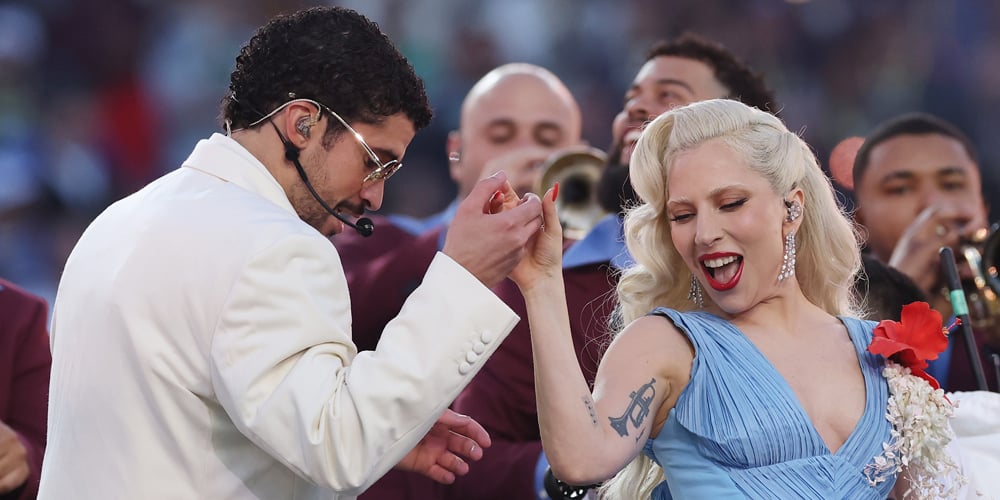
Bad Bunny Halftime Show Translation: Unpacking Lyrics, Latino Pride & Unity Message
When Bad Bunny took the stage for the Super Bowl Halftime Show, he didn't just deliver a musical performance; he orchestrated a cultural phenomenon. His set, predominantly in Spanish, captivated millions, sparking conversations about identity, language, and the evolving face of global entertainment. For those unfamiliar with his vibrant world, a deep dive into the
Bad Bunny Halftime Show Translation: Unpacking Every Explicit Lyric is essential to truly grasp the layers of meaning, the unapologetic celebration of Latino pride, and the powerful unity message he broadcast to the world.
Bad Bunny, the Puerto Rican superstar also known as Benito Antonio Martínez Ocasio, is more than just a chart-topping artist. He's a cultural ambassador, a fashion icon, and a vocal proponent for diverse voices. His Super Bowl appearance was a testament to his immense global reach and a significant moment for representation, bringing reggaeton and Latin trap to the biggest American stage.
The Unfiltered Lyrics: A Glimpse into Benito's World
Bad Bunny's lyrical style is often characterized by its candor, humor, and relatable depictions of modern relationships and party culture. His Halftime Show was no exception, offering a mosaic of his signature themes. For English-speaking audiences, understanding the nuances of the "Bad Bunny Halftime Show Translation" is key to appreciating his artistry.
The performance kicked off with a declarative statement that set the tone for the entire showcase:
"How wonderful it is to be Latino." This wasn't just a line; it was an anthem, a joyful affirmation of identity resonating deeply with the millions who share his heritage and introducing a vibrant culture to countless others.
He then smoothly transitioned into tracks that explore the complexities of modern romance, often with a playful, self-aware twist. Lines like, "Auntie asked me if I have a lot of girlfriends, ayy, a lot of girlfriends / Today I have one, tomorrow I'll have another, heh, but there's no wedding," illustrate a carefree, bachelor lifestyle, a common trope in reggaeton, delivered with a wink. This casual approach to relationships, combined with a touch of humor, humanizes the larger-than-life persona and speaks to a segment of his audience.
The lyrics further paint a picture of a global Lothario, listing a diverse array of women from different nationalities and locations: "I've got a Colombian who writes me every day / And a Mexican I didn't even know about / Another one in San Antonio that still loves me / And the ones from PR that are all mine." This not only showcases his international appeal but also subtly highlights the widespread nature of the Latin diaspora.
As the energy escalated, Bad Bunny delved into themes of self-empowerment and uninhibited enjoyment. Phrases like "Twerking without fear" and "I twerk alone" champion individual freedom and self-expression, particularly for women. The raw, unfiltered portrayal of nightlife – "She took a pill that made her horny / She fucks in the Audi, not in the Honda" – might be explicit, but it reflects a reality in contemporary urban music, delivered with the blunt honesty his fans expect. This isn't just about partying; it's about claiming space and defining pleasure on one's own terms, a message that, despite its explicit nature, resonates with a desire for autonomy.
The recurring invitation to "Party, party, party, party / Welcome to the biggest party in the whole world" transcends linguistic barriers, signaling an open invitation to joy and celebration. It’s an embrace of living in the moment, a carpe diem attitude that is infectious and universal.
Latino Pride: A Vibrant Cultural Showcase
Beyond the individual lyrics, Bad Bunny's Super Bowl Halftime Show was a powerful display of collective Latino pride. His decision to perform primarily in Spanish on a stage traditionally dominated by English-language acts was a significant statement. It asserted the validity and global appeal of Spanish as a language of mainstream entertainment, rather than relegating it to a niche.
The performance served as a vivid cultural tapestry. While the reference context mentions "odes to Hawaii, Puerto Rico," the lyrical content directly reinforces his strong connection to Puerto Rico: "I'm gonna take you to Puerto Rico, baby, so you can see how we dance." This line, coupled with the declaration, "You're listening to music from Puerto Rico / From the neighborhoods and the housing projects," firmly anchors his identity and the origin of his sound. It’s a direct nod to his roots, inviting the world to experience the vibrancy and authenticity of his island nation.
The diverse roster of "girlfriends" from various Latin American countries (Colombia, Mexico, Dominican Republic) and Spain further underscored the broad, multifaceted nature of the Latino experience. It painted a picture of a connected, dynamic community spanning continents, all brought together by shared cultural threads and the universal language of music. Bad Bunny didn't just represent Puerto Rico; he represented a global Latin identity in all its energetic glory.
"Together, We Are America": Decoding the Unity Message
One of the most profound takeaways from Bad Bunny's performance, as highlighted in the context, was his call for unity across "America." This message, "Together, We Are America," carries significant weight, especially when considering the nuances of the word "America" in Spanish.
For many Spanish speakers, "America" (or "América") refers to the entire continent – North, Central, and South America – not solely the United States. This broader interpretation transforms his message from a nationalistic statement into a hemispheric call for solidarity. By declaring "How wonderful it is to be Latino," and then extending a hand across "America," Bad Bunny was advocating for a pan-American unity, celebrating the rich tapestry of cultures, languages, and peoples that comprise the vast continent.
His performance, an eclectic display featuring rhythms and styles popular across Latin America, served as a living embodiment of this unity. It demonstrated how music can transcend borders and linguistic barriers, creating a shared experience of joy and connection. In a world often divided, Bad Bunny's Halftime Show offered a powerful vision of inclusion and mutual celebration. To delve deeper into this critical aspect of his performance, you can read more at
Bad Bunny Halftime Show: Decoding His 'America' Unity Message. It’s a message that emphasizes that strength lies in diversity and that true "America" is a mosaic of many different identities.
Impact and Legacy of a Groundbreaking Performance
Bad Bunny's Super Bowl Halftime Show was more than just entertainment; it was a cultural milestone. It cemented his status as a global icon and significantly amplified the presence of Latin music on one of the world's most watched stages. For artists who have traditionally operated outside the English-speaking mainstream, his performance served as a beacon of possibility, demonstrating that authenticity and cultural identity are not barriers but powerful assets.
His willingness to be unapologetically himself, from his choice of language to the explicit and playful nature of his lyrics, challenged conventional notions of what a Super Bowl performer should be. This authenticity resonated deeply with his existing fanbase and undoubtedly won over new admirers, further expanding the global appeal of reggaeton and Latin trap. The conversations it sparked about language, identity, and representation underscored the performance's lasting impact, solidifying Bad Bunny’s legacy not just as a musician, but as a cultural vanguard.
Conclusion
Bad Bunny's Super Bowl Halftime Show was a vibrant, defiant, and unifying spectacle. Through a medley of his hits, translated lyrics revealing his playful yet candid worldview, and an unshakeable sense of Latino pride, he delivered a performance that transcended mere entertainment. His call for unity across "America," interpreted through a pan-continental lens, was a powerful statement of inclusion and shared identity. Bad Bunny didn't just put on a show; he opened a door, inviting millions into his world and, in doing so, reshaped what the Super Bowl Halftime stage can represent for global music and culture.